
Private Wealth Management Strategies Used by Global Investors sets the stage for this enthralling narrative, offering readers a glimpse into a story that is rich in detail and brimming with originality from the outset.
As we delve deeper into the world of private wealth management, we uncover the intricate strategies employed by global investors to secure and grow their assets in a dynamic financial landscape.
Private Wealth Management Strategies Overview
Private wealth management involves the management of assets and investments for high-net-worth individuals to help them achieve their financial goals and preserve their wealth for future generations. It goes beyond traditional financial planning by offering personalized services tailored to the specific needs and objectives of each client.Tailored strategies are crucial for high-net-worth individuals because their financial situations are often more complex and unique compared to the average investor.
By customizing investment plans and wealth management solutions, individuals with significant assets can maximize returns, minimize risks, and optimize tax efficiency.
Investment Vehicles in Private Wealth Management
Private wealth managers utilize a variety of investment vehicles to help their clients grow and protect their wealth. Some common examples include:
- Equity Investments: Investing in individual stocks or equity funds to participate in the growth of companies.
- Real Estate: Acquiring properties for rental income, capital appreciation, and portfolio diversification.
- Alternative Investments: Including hedge funds, private equity, and venture capital to access unique opportunities not available in traditional markets.
- Fixed-Income Securities: Investing in bonds and other debt instruments to generate steady income and preserve capital.
- Structured Products: Customized investment products designed to meet specific risk-return profiles and investment objectives.
Key Factors Influencing Private Wealth Management Strategies
Private wealth management strategies are influenced by a variety of key factors that play a crucial role in shaping investment decisions and financial planning. Understanding these factors is essential for global investors looking to optimize their wealth management strategies.Global Economic Trends:Global economic trends have a significant impact on wealth management decisions.
Investors need to stay informed about the state of the global economy, including factors such as GDP growth, inflation rates, interest rates, and geopolitical events. These trends can affect investment returns, asset allocation, and risk management strategies.Risk Tolerance:Risk tolerance is another key factor that influences private wealth management strategies.
Investors must assess their risk tolerance levels to determine the appropriate mix of investments in their portfolios. Understanding how much risk one is willing to take on can help in designing investment strategies that align with individual financial goals and objectives.Tax Considerations:Tax considerations also play a crucial role in influencing wealth management choices.
Investors need to be mindful of the tax implications of their investment decisions, including capital gains taxes, dividend taxes, and estate taxes. By optimizing tax strategies, investors can potentially increase their after-tax returns and preserve wealth for future generations.
Impact of Global Economic Trends
Global economic trends can have a significant impact on private wealth management strategies. Investors need to closely monitor key economic indicators and trends to make informed investment decisions. Factors such as interest rates, inflation, and currency fluctuations can influence asset allocation and investment performance.
- Interest Rates: Changes in interest rates can affect the returns on fixed-income investments such as bonds and treasury securities. Investors may need to adjust their portfolios in response to interest rate movements to mitigate risks and capitalize on opportunities.
- Inflation: High inflation rates can erode the purchasing power of investments over time. Wealth managers may recommend inflation-protected securities or other assets that can help hedge against inflation risks.
- Currency Fluctuations: Exchange rate movements can impact the value of international investments. Investors with exposure to foreign currencies need to consider currency risk and may use hedging strategies to manage this risk effectively.
Role of Risk Tolerance in Investment Strategies
Risk tolerance is a crucial factor that influences the design of investment strategies in private wealth management. Understanding one's risk tolerance can help investors make informed decisions about asset allocation, diversification, and risk management. Wealth managers often use risk tolerance assessments to tailor investment recommendations that align with clients' risk profiles.
It is important for investors to strike a balance between risk and return based on their individual risk tolerance levels and financial goals.
Importance of Tax Considerations in Wealth Management
Tax considerations are a key aspect of wealth management that can significantly impact investment decisions and overall portfolio performance. Investors need to be aware of the tax implications of their investment choices and implement tax-efficient strategies to minimize tax liabilities and maximize after-tax returns.
- Capital Gains Taxes: Investors may need to consider the tax consequences of realizing capital gains on investments. Strategies such as tax-loss harvesting can help offset capital gains and reduce tax obligations.
- Dividend Taxes: Dividend income is subject to taxation, and investors need to evaluate the tax implications of dividend-paying investments. Utilizing tax-advantaged accounts or qualified dividend stocks can help minimize tax liabilities.
- Estate Taxes: Planning for estate taxes is essential for preserving wealth and passing assets to future generations. Wealth managers can help clients develop estate planning strategies that minimize estate tax exposure and ensure efficient wealth transfer.
Diversification in Private Wealth Management
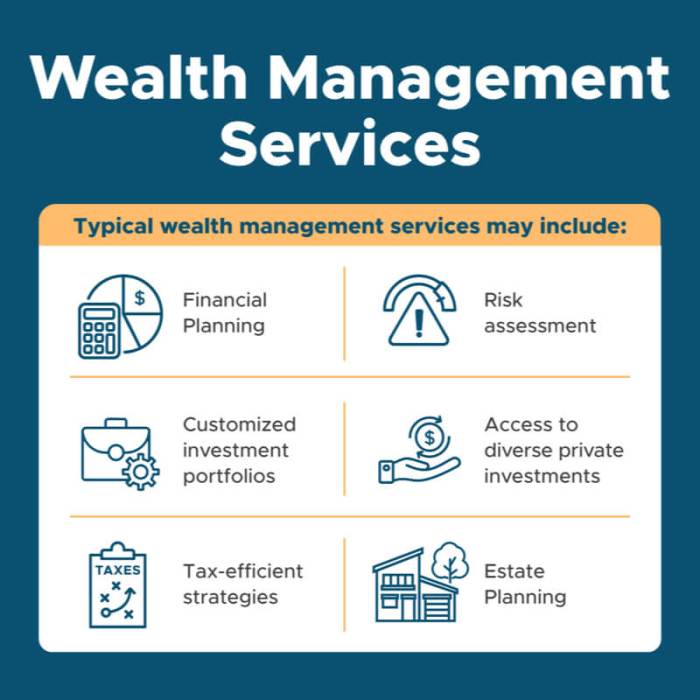
Diversification is a strategy used in private wealth management to spread investments across different asset classes to reduce risk. By diversifying, investors can minimize the impact of volatility in any single asset or market segment on their overall portfolio.
Comparing Asset Classes for Diversification
- Stocks: Investing in stocks provides the potential for high returns but also comes with higher risks due to market fluctuations.
- Bonds: Bonds are considered safer investments compared to stocks, offering fixed income but with lower potential returns.
- Real Estate: Real estate investments can provide a stable income stream and potential for appreciation over time, adding diversification to a portfolio.
- Commodities: Investing in commodities like gold, oil, or agricultural products can help hedge against inflation and provide diversification benefits.
Benefits of Diversification in Mitigating Risks
- Diversification helps reduce the impact of market volatility on a portfolio by spreading investments across different asset classes.
- By investing in a mix of assets that respond differently to market conditions, investors can minimize the risk of significant losses in any one investment.
- During economic downturns, diversification can help cushion the impact on a portfolio by having assets that are not correlated to each other.
Wealth Preservation Techniques in Private Wealth Management
Preserving wealth over generations is a crucial aspect of private wealth management. It involves implementing strategies to protect assets and ensure their longevity for future beneficiaries.
Role of Estate Planning
Estate planning plays a vital role in private wealth management as it involves structuring how assets will be distributed upon the owner's death. It helps minimize tax liabilities and ensures a smooth transfer of wealth to the intended heirs.
Use of Insurance Products
Insurance products are commonly used in wealth management to safeguard assets against unforeseen events. They provide a layer of protection by offering financial coverage in case of emergencies, such as illness, accidents, or natural disasters.
Emerging Trends in Global Private Wealth Management
In today's rapidly evolving financial landscape, several emerging trends are reshaping the way private wealth management is conducted on a global scale. These trends are influencing the strategies and decisions of wealth managers and investors alike.
Impact of Technology on Wealth Management Services
Technology has revolutionized the way wealth management services are delivered. The rise of robo-advisors, artificial intelligence, and blockchain technology has automated and streamlined many aspects of wealth management. These technological advancements have made it easier for investors to access financial information, monitor their portfolios, and execute trades efficiently.
Additionally, data analytics and machine learning algorithms have enabled wealth managers to provide more personalized investment advice tailored to individual client needs.
Growing Focus on Sustainable and Socially Responsible Investments
There is a noticeable shift towards sustainable and socially responsible investments in the private wealth management sector. Investors are increasingly prioritizing environmental, social, and governance (ESG) factors when making investment decisions. This growing awareness of sustainable investing practices has led to the development of ESG-focused investment products and strategies.
Wealth managers are now integrating ESG considerations into their portfolio construction process to align investments with client values and long-term sustainability goals.
Final Thoughts
In conclusion, the realm of private wealth management offers a tapestry of strategies and techniques that cater to the unique needs of high-net-worth individuals. With a focus on tailored solutions, diversification, wealth preservation, and emerging trends, global investors navigate the complexities of wealth management with precision and foresight.
FAQs
What is the importance of tailored strategies in private wealth management?
Tailored strategies in private wealth management are crucial as they cater to the specific financial goals and risk appetites of high-net-worth individuals, ensuring optimal growth and asset protection.
How do tax considerations influence wealth management choices?
Tax considerations play a significant role in wealth management decisions by impacting investment returns, estate planning, and overall financial strategies to minimize tax liabilities and maximize wealth preservation.
What are some current trends in global private wealth management?
Current trends in global private wealth management include the integration of technology, a focus on sustainable investments, and the adoption of socially responsible practices to align financial goals with environmental and social impact.