
As How Money Wealth Management Supports Sustainable Investing takes center stage, this opening passage beckons readers with a captivating overview of the intricate relationship between wealth management and sustainable investing. It delves into the core concepts and practical applications, offering a glimpse into a realm where financial prosperity aligns seamlessly with environmental and social responsibility.
The subsequent paragraphs will explore the significance of integrating sustainable factors in wealth management, strategies for successful implementation, challenges and opportunities, and the promising future of sustainable investing within the realm of wealth management.
Introduction to Wealth Management and Sustainable Investing
Wealth management refers to the professional management of an individual's financial assets and investments to help them achieve their financial goals. On the other hand, sustainable investing involves investing in companies or projects that promote environmental, social, and governance (ESG) criteria while seeking financial returns.
Relationship Between Wealth Management and Sustainable Investing
Wealth management can play a crucial role in supporting sustainable investing by aligning clients' financial goals with their values and beliefs. This involves integrating ESG factors into investment decisions to contribute to a more sustainable future.
- Offering ESG Investment Options: Wealth managers can provide clients with investment opportunities that focus on companies demonstrating strong ESG practices, such as renewable energy companies or those promoting diversity and inclusion.
- Impact Investing: Wealth managers can help clients allocate funds to impact investments that generate positive social and environmental outcomes alongside financial returns. This can include investments in affordable housing projects or clean technology initiatives.
- Engagement and Advocacy: Wealth managers can engage with companies to encourage better ESG practices and advocate for sustainable business practices. This can involve voting on shareholder resolutions or participating in ESG-related initiatives.
Importance of Integrating Sustainable Factors in Wealth Management
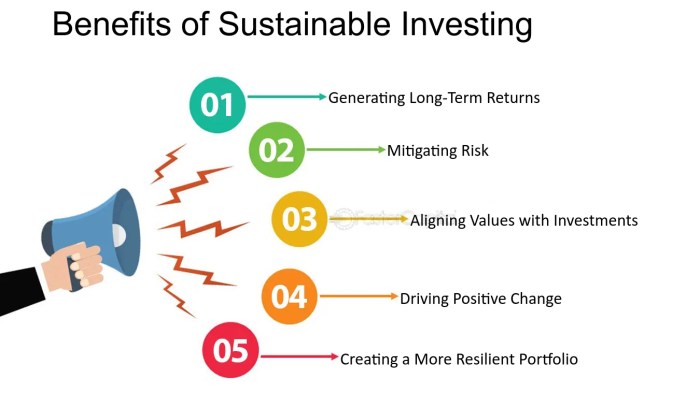
Integrating sustainable factors in wealth management is crucial for a variety of reasons, including promoting responsible investing practices and ensuring long-term financial stability.
Benefits of Incorporating Sustainable Factors
- Enhanced Risk Management: By considering environmental, social, and governance (ESG) factors, wealth managers can better identify and mitigate potential risks in investment portfolios.
- Alignment with Values: Sustainable investing allows individuals to align their investment decisions with personal values and beliefs, promoting a sense of purpose and fulfillment.
- Long-Term Performance: Companies that prioritize sustainability tend to perform well over the long term, providing investors with stable and consistent returns.
Role of Wealth Managers in Promoting Sustainable Investing
- Educating Clients: Wealth managers play a crucial role in educating clients about the benefits of sustainable investing and helping them understand how it can align with their financial goals.
- Portfolio Integration: Wealth managers can actively integrate ESG factors into investment strategies, ensuring that client portfolios are both financially sound and socially responsible.
- Advocacy and Engagement: Wealth managers can advocate for sustainable practices within the investment community and engage with companies to promote positive change.
Strategies for Implementing Sustainable Investing in Wealth Management
Implementing sustainable investing practices in wealth management involves several strategies that focus on integrating environmental, social, and governance (ESG) criteria into investment decisions. By considering these factors, investors can align their portfolios with companies that are committed to sustainability and responsible business practices, ultimately leading to positive financial and social outcomes.
Integration of ESG Criteria
- Integrating ESG criteria involves analyzing how environmental, social, and governance factors can impact the financial performance of an investment.
- Investors evaluate companies based on their sustainability practices, ethical standards, and transparency in governance to make informed investment decisions.
- By incorporating ESG criteria, investors can identify opportunities for long-term growth and risk management while supporting sustainable practices.
Impact on Investment Decisions
- ESG criteria influence investment decisions by guiding investors to select companies with strong sustainability practices and a positive impact on society.
- Investors consider factors such as carbon footprint, diversity and inclusion policies, and ethical supply chain management to make sustainable investment choices.
- Companies that prioritize ESG factors are more likely to attract socially responsible investors and achieve better financial performance in the long run.
Successful Cases of Sustainable Investing
- One successful case of sustainable investing is the integration of renewable energy companies into investment portfolios, leading to both financial returns and environmental benefits.
- Investing in companies with strong corporate social responsibility initiatives has shown to enhance brand reputation and customer loyalty, translating into long-term value creation.
- By incorporating ESG factors into wealth management strategies, investors can achieve both financial growth and positive societal impact, demonstrating the effectiveness of sustainable investing practices.
Challenges and Opportunities in Money Management for Sustainable Investing
Combining wealth management with sustainable investing presents various challenges and opportunities that need to be carefully navigated to achieve success
Common Challenges Faced in Sustainable Wealth Management
- Lack of standardized metrics for measuring sustainability performance across different industries and companies.
- Difficulty in finding sustainable investment options that align with clients' financial goals and risk tolerance.
- Higher volatility and potential liquidity constraints in some sustainable investment assets.
- Limited availability of reliable ESG (Environmental, Social, and Governance) data for thorough analysis.
Opportunities for Growth and Innovation in Sustainable Wealth Management
- Increasing demand from investors for sustainable investment products, leading to a growing market for wealth managers.
- Advancements in technology enabling better ESG data collection and analysis, improving investment decision-making.
- Collaboration with sustainable finance experts and research institutions to develop innovative investment strategies.
- Integration of sustainable investing principles into traditional wealth management practices, attracting a broader client base.
Potential Risks Associated with Sustainable Investing and Mitigation Strategies
- Regulatory changes impacting the sustainability criteria or tax implications of investments, leading to financial risks.
- Greenwashing or misrepresentation of the sustainability performance of investments, affecting portfolio returns.
- Climate-related risks such as physical risks from natural disasters or transition risks from shifting regulations and market preferences.
- Implementing diversification strategies to mitigate risks associated with concentrating investments in specific sustainable sectors or assets.
The Future of Wealth Management with Sustainable Investing
In the ever-evolving landscape of wealth management, the integration of sustainable investing is set to play an increasingly prominent role. As investors become more socially and environmentally conscious, the future of wealth management is likely to be heavily influenced by sustainable investing practices.
Let's explore some key trends and advancements that are shaping the future of wealth management in the context of sustainable investing.
Predicted Trends in Sustainable Investing
- Increased Demand: There is a growing demand for sustainable investment options as investors seek to align their financial goals with their values.
- Regulatory Push: Governments and regulatory bodies are expected to introduce more stringent guidelines and regulations to promote sustainable investing.
- Mainstream Integration: Sustainable investing is anticipated to become more mainstream, with traditional wealth management firms incorporating ESG factors into their investment strategies.
Advancements in Technology for Sustainable Wealth Management
- AI and Machine Learning: Technology-driven solutions such as AI and machine learning are being utilized to analyze ESG data and identify sustainable investment opportunities.
- Digital Platforms: Online platforms and robo-advisors are providing investors with easy access to sustainable investment products and personalized advice.
- Blockchain Technology: Blockchain is being explored to enhance transparency and traceability in sustainable investing, ensuring the integrity of ESG data.
Role of Financial Advisors in Educating Clients
- Education and Awareness: Financial advisors are increasingly taking on the role of educators, helping clients understand the benefits and risks associated with sustainable investing.
- Customized Solutions: Advisors are tailoring investment strategies to meet the specific sustainability preferences and financial goals of individual clients.
- Collaborative Approach: Financial advisors are collaborating with ESG experts to provide clients with comprehensive insights into sustainable investment opportunities.
Ultimate Conclusion
In conclusion, the journey through How Money Wealth Management Supports Sustainable Investing unveils a landscape brimming with possibilities and positive impact. By understanding and harnessing the power of sustainable investing, individuals and organizations can pave the way for a financially secure and environmentally conscious future.
User Queries
How can sustainable factors enhance wealth management practices?
Integrating sustainable factors in wealth management can lead to more resilient portfolios, reduced risk exposure, and alignment with ethical values.
What are some common challenges in combining wealth management with sustainable investing?
Challenges may include limited data availability for ESG analysis, perception of lower returns, and the need for specialized expertise in sustainable investing.
How do wealth managers promote sustainable investing?
Wealth managers play a crucial role in educating clients about sustainable investment options, integrating ESG criteria in portfolio construction, and advocating for sustainable practices within the financial industry.
What role does technology play in supporting sustainable wealth management?
Technology enables efficient ESG data analysis, impact measurement tools, and digital platforms for sustainable investing, enhancing the accessibility and transparency of sustainable wealth management practices.
What are the future trends in integrating sustainable investing in wealth management?
Future trends may involve increased standardization of ESG metrics, greater emphasis on impact investing, and advancements in sustainable financial products tailored to diverse investor preferences.